Arusha National Park is a multi-faceted gem, often overshadowed by Tanzania's larger, more famous parks, yet offering experiences found nowhere else. Minutes from the city that serves as safari gateway to the north, this compact park delivers mountain scenery, crater viewpoints, lake adventures, and forest walks—all in a single day. For travelers seeking depth beyond standard game drives, Arusha National Park rewards with intimate wildlife encounters and activities impossible in parks focused solely on big game.
Established in 1960, the park protects a critical water catchment area for the region, with Mount Meru's forested slopes capturing moisture that feeds rivers flowing to surrounding farmland. This ecological role explains the park's extraordinary diversity—altitude ranges from 1,500 meters at lake level to 4,566 meters at Meru's summit, creating climate zones from montane forest through moorland to alpine desert within the park's boundaries. Understanding this gradient enriches every visit, as you literally drive from one ecosystem to another in under an hour.
The park's geological story adds another layer. Mount Meru, like Kilimanjaro, is a stratovolcano that erupted violently around 8,000 years ago, blowing out its eastern flank and creating the dramatic horseshoe ridge visible today. That eruption deposited ash and debris across the landscape, forming the fertile soils that support lush forest growth. Ngurdoto Crater represents a different volcanic feature—a maar, formed when magma encountered groundwater, causing steam explosions that left a circular depression. Momella Lakes occupy shallow basins scooped by ancient glaciers, their varying chemistry creating the distinct colors visible from viewpoints. Together, these features create a geological museum accessible in a single park.
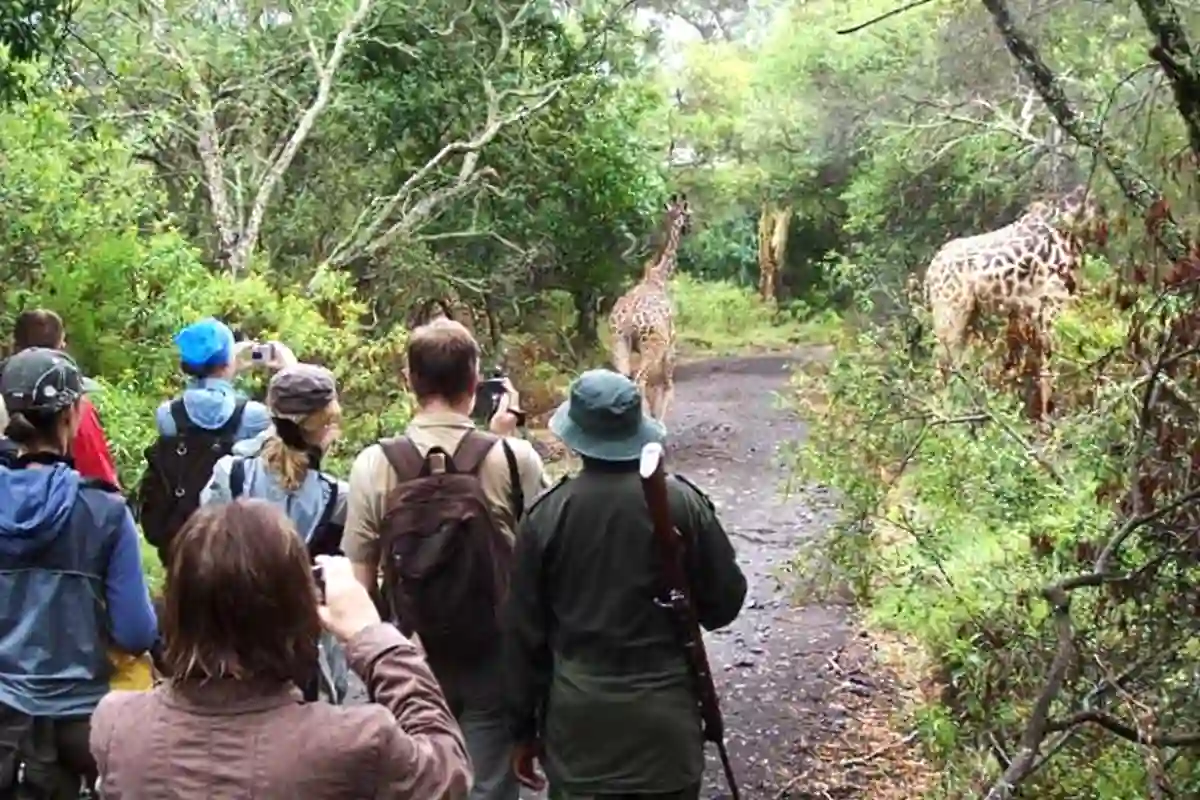
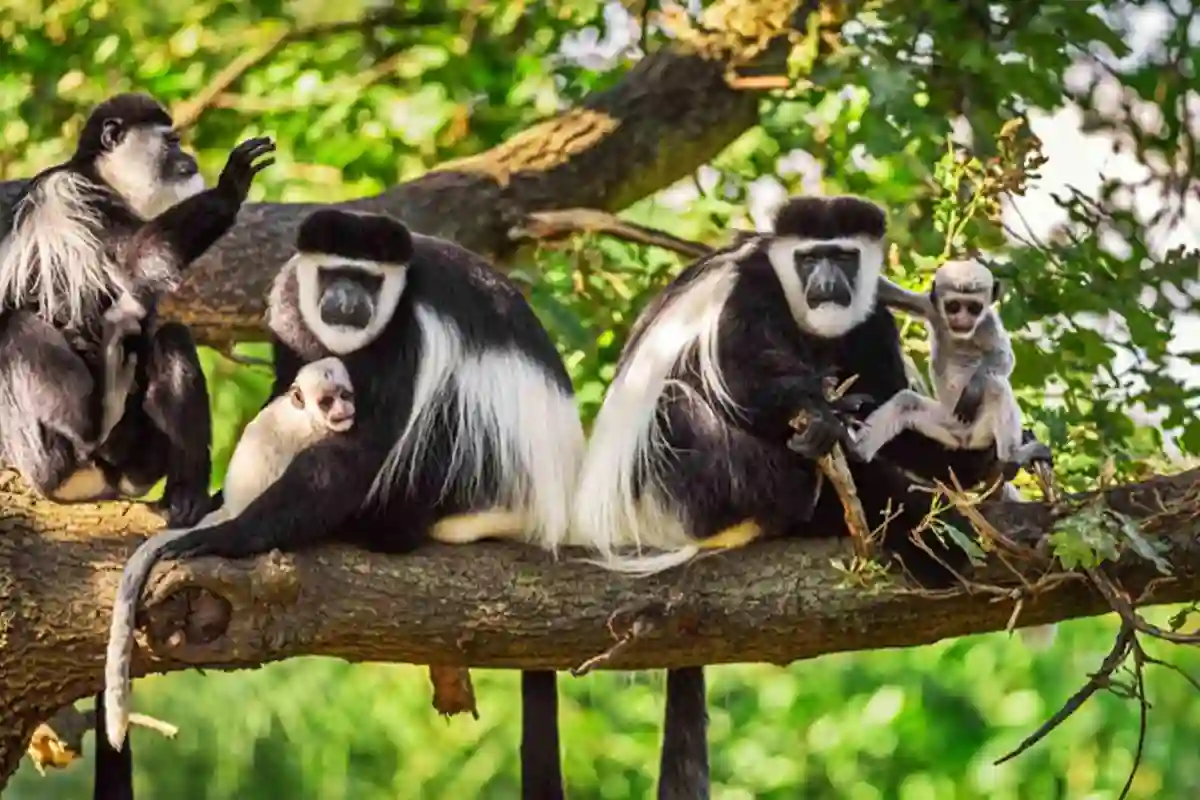
Wildlife viewing follows different rhythms than larger parks. Forest species dominate, with olive baboons, blue monkeys, and black-and-white colobus monkeys providing constant entertainment along roadsides. The colobus, with their striking black-and-white coats and flowing white tail plumes, are among Africa's most beautiful primates—you'll spot them leaping between treetops, their acrobatics drawing gasps from first-time visitors. Giraffes here belong to the Masai subspecies, their irregular star-shaped spots distinct from patterns elsewhere. Buffalo herds in Ngurdoto Crater offer classic African scenes viewed from above, their dark shapes contrasting with green crater floor.
Bird life exceeds 400 species, making Arusha National Park a premier destination for birders. Beyond flamingos and water birds on Momella Lakes, the forests shelter turacos, hornbills, robin-chats, and barbets that elude visitors in more open parks. Forest walks with rangers reveal these species along with the subtle calls and movements that casual observers miss. The park's location on altitudinal migration routes means species composition shifts with seasons, guaranteeing new discoveries on return visits.
Cultural history surrounds the park as well. The Meru people, for whom the mountain is named, have lived on its slopes for centuries, developing agricultural systems adapted to volcanic soils and steep terrain. Their terraced farms, visible from park viewpoints, demonstrate sophisticated land management passed through generations. The park's boundaries incorporate traditional lands, and partnerships with local communities support conservation while providing benefits to those living adjacent to wildlife. Village visits outside the park offer opportunities to learn about Meru culture, taste traditional foods, and understand modern challenges of coexisting with wildlife.
Whether you have a few hours between flights, a full day before heading north, or seek active adventures beyond standard safaris, Arusha National Park delivers. Contact us to arrange your visit—walking safari, canoe adventure, or classic game drive—and discover why this compact park captures hearts of those who take time to explore its depths.
Browse our available safari packages: